
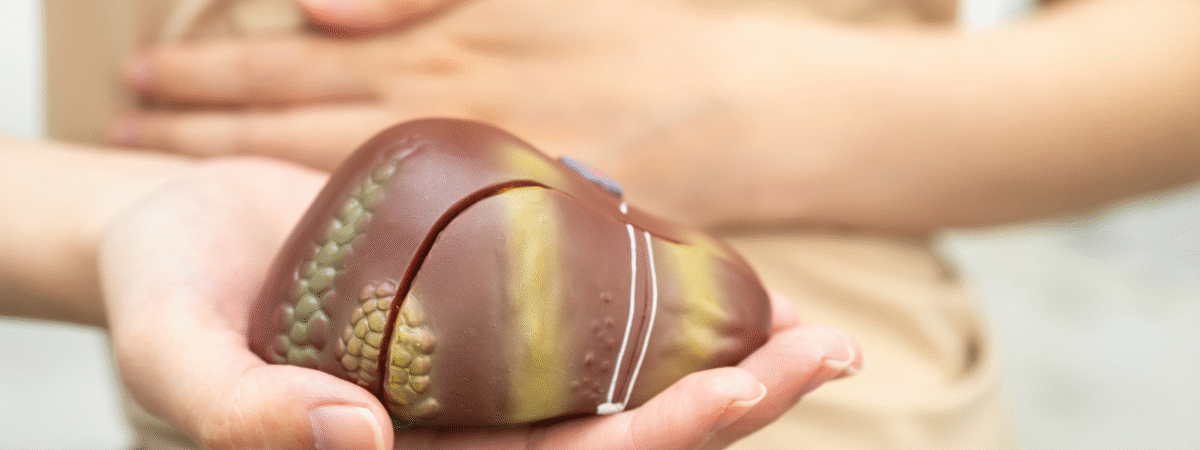
Fatty liver often flies under the radar—quietly developing, rarely causing symptoms, and easy to ignore. But just because it’s silent doesn’t mean it’s harmless. The good news? You don’t need superhuman willpower or fancy treatments to turn things around. You absolutely CAN take small, practical steps to support your liver and your overall health—starting today.
What Is Fatty Liver (MASLD) and Why Should You Care?
Hey there! I’m Dr. Leybelis Padilla, a gastroenterologist (and proud wellness nerd), and today I want to talk about something that’s way more common than most people realize: fatty liver disease—now called Metabolic Associated Steatotic Liver Disease (MASLD). It used to be called NAFLD (Non-alcoholic liver disease), but because its cause is more metabolically driven, the MASLD name was preferred by consensus among liver experts.
Did you know more than 1 in 4 adults worldwide have this? (Younossi et al., 2021)
The wild part? Most folks don’t even know, because it usually doesn’t cause symptoms.
You might be thinking, who cares if my liver is fat!? And in some way, I get it. But here is the truth. The same way fat can accumulate in the arteries of your heart and cause a heart attack, it can also accumulate within the liver causing inflammation over time. And it is that inflammation over time that can cause scarring, which can lead to a level of advanced scarring called cirrhosis. And get this, MASLD is now competing with alcoholic related liver disease as the leading cause of liver transplantation in the United States, with experts trending that MASLD will soon overtake alcohol related disease as the number one reason for liver transplant. So that’s why it’s important!
👉 Want the full scoop on what fatty liver is, why it matters, and how to spot it early? Don’t miss my foundational guide: Fatty Liver: The Silent Condition You Shouldn’t Ignore.
"Metabolic dysfunction-associated steatotic liver disease (MASLD) affects over a quarter of adults globally, yet most remain unaware due to its silent progression."
Younossi, Z.M., et al., Hepatology, 2021
How Do You Even Know If You Have Fatty Liver?
Most of my patients find out by accident—maybe their doctor orders an ultrasound for something else, or routine bloodwork shows elevated liver enzymes. Suddenly, you’re hearing about “fatty liver” and wondering what to do next.
Risk factors include obesity, type 2 diabetes, high cholesterol, and metabolic syndrome. If you have any of these, ask your doctor about screening.
How Exercise Helps Reverse Fatty Liver
Here’s the good news: while there are limited medications approved for the treatment of fatty liver, there’s one therapy that always works, and with the best evidence to support it-movement.
Seriously, exercise is where the magic happens for your liver and your whole metabolism (Xue et al., 2024).
Movement doesn’t have to mean hitting the gym. Even simple, consistent daily activity counts.
"Exercise remains the cornerstone therapy for fatty liver disease—improving liver health and metabolic function, regardless of weight loss."
Xue, Y., et al., Scientific Reports, 2024
How Much Exercise Do You Need for MASLD and What Kind?
- Walking briskly (fast enough that you can talk in short sentences, but not hold a conversation)
- Cycling at a steady pace
- Swimming laps or water aerobics
- Dancing (Zumba, aerobic dance, or energetic social dancing)
- Hiking on easy or moderately hilly terrain
- Playing tennis or pickleball
For a 50-year-old, that’s around 109–129 beats per minute.
Weight Loss and Liver Health: What’s the Connection?
- Prioritize fiber-rich foods like vegetables, beans, and whole grains to stay full and support your metabolism.
- Watch portion sizes and try using smaller plates or bowls.
- Limit sugary drinks, opting for water or unsweetened beverages.
- Plan meals and snacks ahead of time to avoid last-minute temptations.
- Track your progress and celebrate small wins.
"Losing just 7–10% of your body weight can significantly reduce liver inflammation and may even reverse scarring in fatty liver disease."
Vilar-Gomez, E., et al., Gastroenterology, 2015
Easy Ways to Add More Movement to Your Day
- Take the stairs instead of the elevator.
- Park farther away at work or the store to get extra steps.
- Drink more water so you have to get up and move throughout the day.
- Set an alarm to stand up and stretch every hour during desk work.
- Walk for 10–15 minutes after meals, especially after dinner—this helps blunt blood sugar spikes and supports your liver (Dunstan et al., 2012).
- Make family “digestive walks” a nightly tradition.
- Try “movement snacks”: 2–3 minutes of squats, lunges, or stair climbing every hour.
- Take phone calls while walking, or try standing meetings.
- Do a few stretches or yoga poses while watching TV or during commercial breaks.
Curious how mindful movement can support both your digestion and stress levels? Check out my article, Yoga for Digestion: Evidence-Based Relief for IBS and Gut Health, for simple routines and the science behind why yoga works.
The Role of Strength Training and Sauna for Liver Support
- Regular sauna use (4x/week, around 180°F+) can mimic some benefits of exercise—like boosting circulation and heart health (Laukkanen et al., 2018).
- Resistance training builds muscle, increases your resting metabolism, and helps with glucose control.
Pairing Exercise With Fiber-Rich Foods
- Beans and lentils
- Oats and whole grains
- Berries and apples
- Chia seeds and flaxseed
- Leafy greens and broccoli
Takeaways: Simple Steps for Lasting Liver Health
- Fatty liver usually has no symptoms—so regular screening and lifestyle changes are key.
- Get your labs checked at least annually (a CMP includes liver enzymes and can signal inflammation).
- Moderate exercise and gradual weight loss are proven to improve or even reverse fatty liver (Fealy et al., 2018; Vilar-Gomez et al., 2015).
- Add more movement throughout your day and make it a habit for the whole family.
- Saunas and strength training can further support your progress.
- Pair exercise with fiber-rich, nutrient-dense foods for even better results (Fan & Pedersen, 2020).
References
Younossi, Z.M., et al. (2021). Global epidemiology of NAFLD–Meta-analytic assessment of prevalence, incidence, and outcomes. Hepatology.
URL:https://www.ncbi.nlm.nih.gov/pmc/articles/PMC8468017/
Xue, Y., Peng, Y., Zhang, L., Ba, Y., Jin, G., & Liu, G. (2024). Effect of different exercise modalities on nonalcoholic fatty liver disease: a systematic review and network meta-analysis. Scientific Reports.
URL:https://www.nature.com/articles/s41598-024-58906-3
Fealy, A., Hari, A., & Kirwan, J. (2018). Short-term exercise improves hepatic insulin extraction in individuals with nonalcoholic fatty liver disease. Diabetes.
URL:https://doi.org/10.2337/db18-0173
Vilar-Gomez, E., Martinez-Perez, Y., Calzadilla-Bertot, L., et al. (2015). Weight loss through lifestyle modification significantly reduces features of nonalcoholic steatohepatitis and improves fibrosis. Gastroenterology. URL:https://www.gastrojournal.org/article/S0016-5085(15)00199-X/fulltext
Dunstan, D.W., et al. (2012). Breaking Up Prolonged Sitting Reduces Postprandial Glucose and Insulin Responses. Diabetes Care.
URL:https://www.semanticscholar.org/paper/Breaking-Up-Prolonged-Sitting-Reduces-Postprandial-Dunstan-Kingwell/59d440ab2be9746417ce00ff099229203b4a3bd2
Laukkanen, T., Khan, H., Zaccardi, F., Willeit, P., & Laukkanen, J.A. (2018). Sauna bathing is associated with reduced cardiovascular mortality and improves risk prediction in men and women: A prospective cohort study. Progress in Cardiovascular Diseases.
URL:https://doi.org/10.1016/j.pcad.2018.10.002
Fan, Y., & Pedersen, O. (2020). Gut microbiota in human metabolic health and disease. Nature Reviews Microbiology.
URL:https://doi.org/10.1038/s41579-020-0433-9