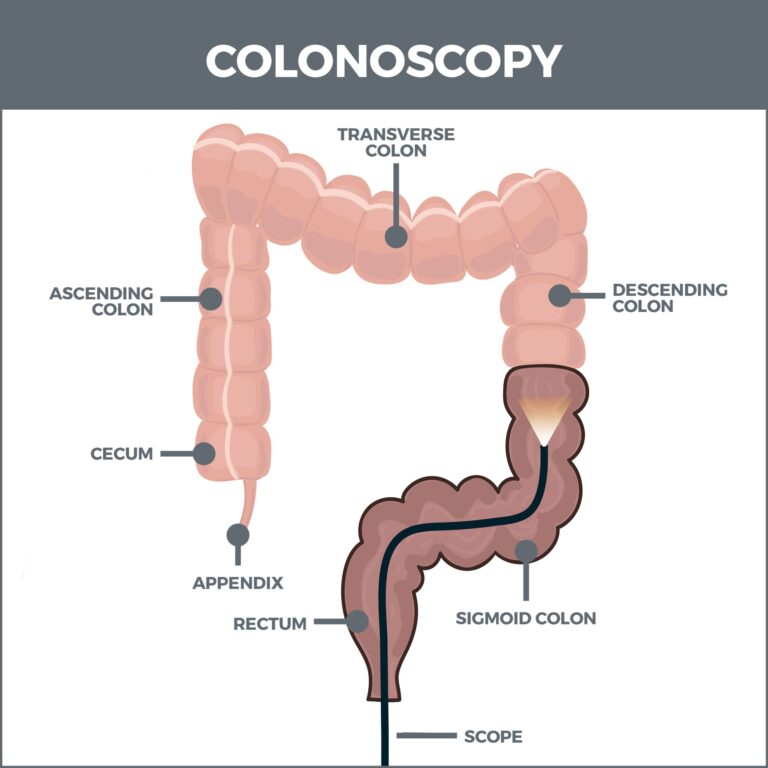
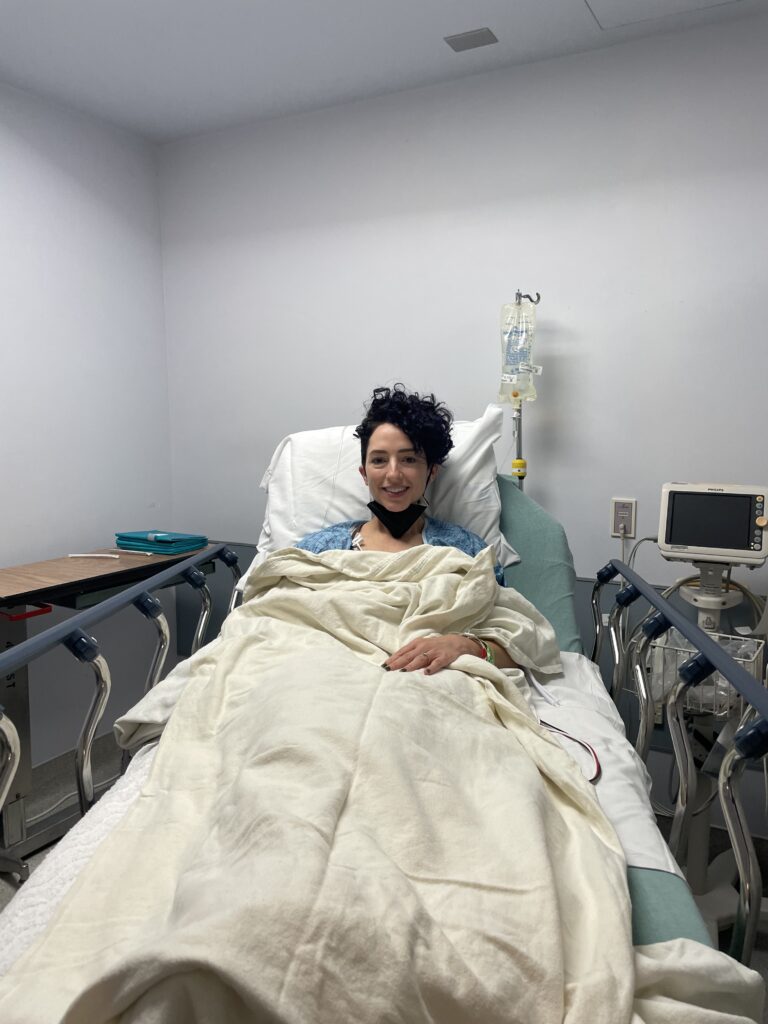
A colonoscopy is a medical procedure that examines the large intestine (colon) using a flexible tube with a camera and light on the end. Overall, a colonoscopy is a routine procedure that can help detect and prevent colon cancer but is also used to diagnose medical conditions such as inflammatory bowel disease (i.e. Crohn’s and ulcerative colitis). It’s important to follow your doctor’s instructions carefully leading up to the procedure to ensure the best possible results.
Here’s what to expect when you’re scheduled for a colonoscopy:
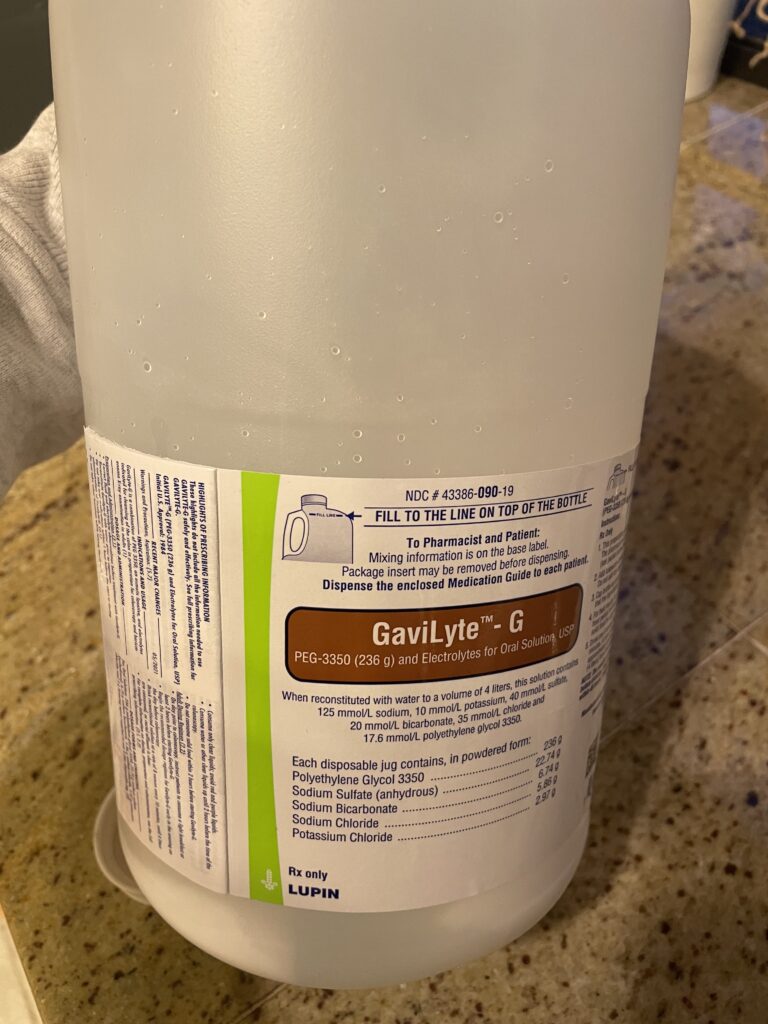
Days leading up to the procedure, you may be instructed to follow a special diet and avoid certain foods. Your doctor may also recommend taking a laxative to help clean out your colon.
The day before the procedure, you will be on a clear liquid diet. This includes water, clear broth, apple juice, and Jell-O. You will need to avoid solid foods, dairy products, and beverages with red or purple coloring.
The procedure itself typically takes 30-60 minutes, during which time the doctor will examine your colon, possibly take biopsies and remove any polyps.
After the procedure, you will be monitored in a recovery area until the effects of the sedation wear off. You may experience some mild discomfort or bloating, but this should go away quickly. You will be able to resume your normal activities the following day.
Will I be asleep?
On the day of the procedure, you will likely be given a sedative to help you relax and make the procedure more comfortable. This is not a surgery, so it is very normal to be in and out of awareness such as occasionally seeing what is on the TV screen, hearing conversations in the room, or feeling a pressure like sensation. Your physician and other members of the team will be monitoring you for safety and to ensure your comfort.
For perspective, it’s important to know that this procedure is sometimes performed completely awake in some patients and that’s ok; it’s often not medically necessary to be completely asleep for the procedure. In the United States at least, it is common practice that you will receive some form of sedation and will be comfortable during the procedure. It’s important that if you have questions or concerns surrounding this topic to talk with your doctor ahead of time.
What foods should you avoid the days leading up to a colonoscopy?
Generally, the days leading up to a colonoscopy, you should avoid foods that are high in fiber, as well as anything that is difficult to digest or could leave residue in your colon. Some examples of foods to avoid may include:
- Whole grains, nuts, and seeds
- Raw fruits and vegetables
- Beans and legumes
- Dairy products
- Red meat and fatty meats
- Fried or greasy foods
- Alcohol
It’s important to follow your doctor’s instructions carefully and make sure to ask any questions you may have about your specific dietary restrictions. Additionally, it’s recommended that you drink plenty of clear fluids to stay hydrated and help with the colon cleansing process.
Can you eat the day prior to your scheduled colonoscopy?
Yes, you can “eat” the day before your colonoscopy, but your diet should be limited to clear liquids only. This includes water, tea, clear broth, apple juice, and sports drinks. You should avoid anything that is red or purple in color, as well as anything with pulp or solids.
You may also be allowed to have a solid breakfast or even light food the day before your scheduled procedure, depending on your doctor’s instructions. It’s important to follow these dietary guidelines carefully to ensure that your colon is properly cleaned out and the procedure can be performed safely and effectively.
After a colonoscopy will it feel like I had a colonoscopy?
This is a great question. More importantly, most people are thinking about this question, but won’t ask their doctors if there will be any discomfort, pain or even trauma to the anal area after a colonoscopy.
After a colonoscopy, you may feel some discomfort or mild pain in your abdomen, as well as bloating or gas. However, these sensations should not be severe or long-lasting. In most cases, any discomfort or pain should subside within a few hours to a day after the procedure. Get up, move around after your procedure and pass gas! This allows all that air to get out so you can be feeling back to normal in no time.
It is incredibly rare that you will have any sensation or discomfort in the anal area after a colonoscopy. The camera size is much smaller than most bowel movements, the physician uses lots of lubricant and water to ensure they minimize any risk of trauma to the anal area. Unless you have existing trauma or issues in the anus such as a fissure (tear) or hemorrhoids that can easily get aggravated, most people don’t even “feel” they ever had a colonoscopy in that area.
If you experience severe or prolonged pain, bleeding, or other concerning symptoms after a colonoscopy, be sure to contact your doctor right away.
So you have had a colonoscopy? Now what?
If you had biopsies or polyps removed, then you will be waiting to receive those results which can take around 1-2 weeks. It’s important that these results are followed up on as so many times things can get lost in the system. A delay in getting these results, especially when trying to make a diagnosis of a condition such as inflammatory bowel disease, could delay your treatment. So advocate for yourself if you haven’t heard anything but know you should be expecting a result because the medical system can be very inefficient.
A taste of my own medicine